>
Ask a struggling development team what they did last month and you'll hear about appeals, proposals, and asks. Ask what they know about their top twenty donors — what those people are actually called to, what they're afraid of, what they've said no to before and why — and the room goes quiet.
That gap is the whole problem. Fundraising that begins at the ask depends on pressure, and pressure doesn't compound. Relationship does.
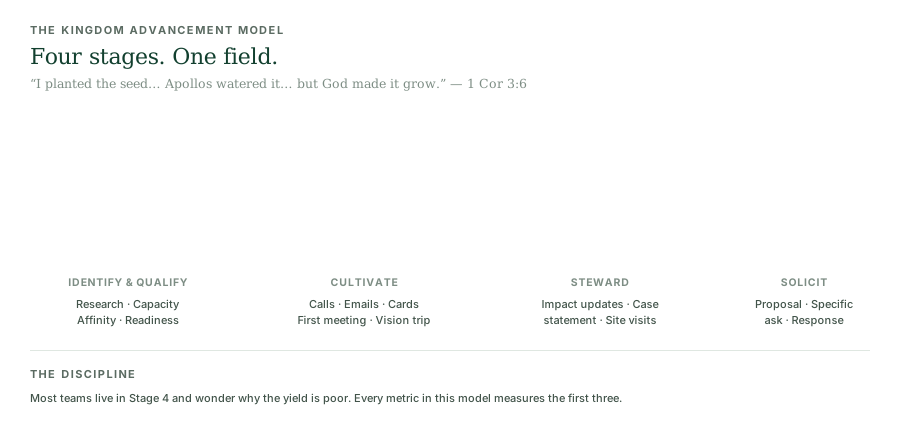
This is a biblically framed version of what the profession calls moves management — and that's the point. It's defensible to a seasoned development officer and legible to a board that thinks in Scripture. Most models are one or the other.
The one rule: every metric in the model measures stages one through three. Stage four is an outcome, not an activity. If your dashboard only counts asks and dollars, you're measuring the harvest and managing nothing that produces it.
The advancement leader as steward, shepherd and strategist — and the two ways that role fails. Plus the handoffs between programs, finance, communications and leadership that donors feel within one cycle when they break.
Each stage worked in full, with metrics and failure modes. Includes the case statement, the ask conversation in three movements, and what to do when the answer is no — which is usually a qualified no.
Gift integrity, honoring restricted intent, confidentiality standards, and the dignity test for stories: would the person in the photograph be comfortable knowing how much it raised?
A five-level competency pathway from Relationship Initiator to Kingdom Catalyst, the long-term donor rhythm, and a team scorecard that measures activity rather than only results.
The most common mistake in advancement is assuming interest equals readiness. Someone can be enthusiastic and still unclear, willing and still unaligned, wealthy and still without peace about it. The handbook gives your team four tests to run before an invitation goes out.
There's a form of urgency that's honest — a real need, a clear assignment, a closing window. And one that isn't: urgency manufactured from anxiety or fear of a shortfall. The line between them is where most fundraising loses its integrity.
A 29-page handbook in four parts — foundations, the four stages, the guardrails, and the formation pathway. Written to be worked through by a team, not read once by a director. Free, and yours to use inside your organization however you like.
“You plant. You water. God gives the growth.”
You aren't responsible for the increase. You're responsible for the ground, the seed, and the water — and most teams are quietly failing at all three while judging themselves on the harvest.